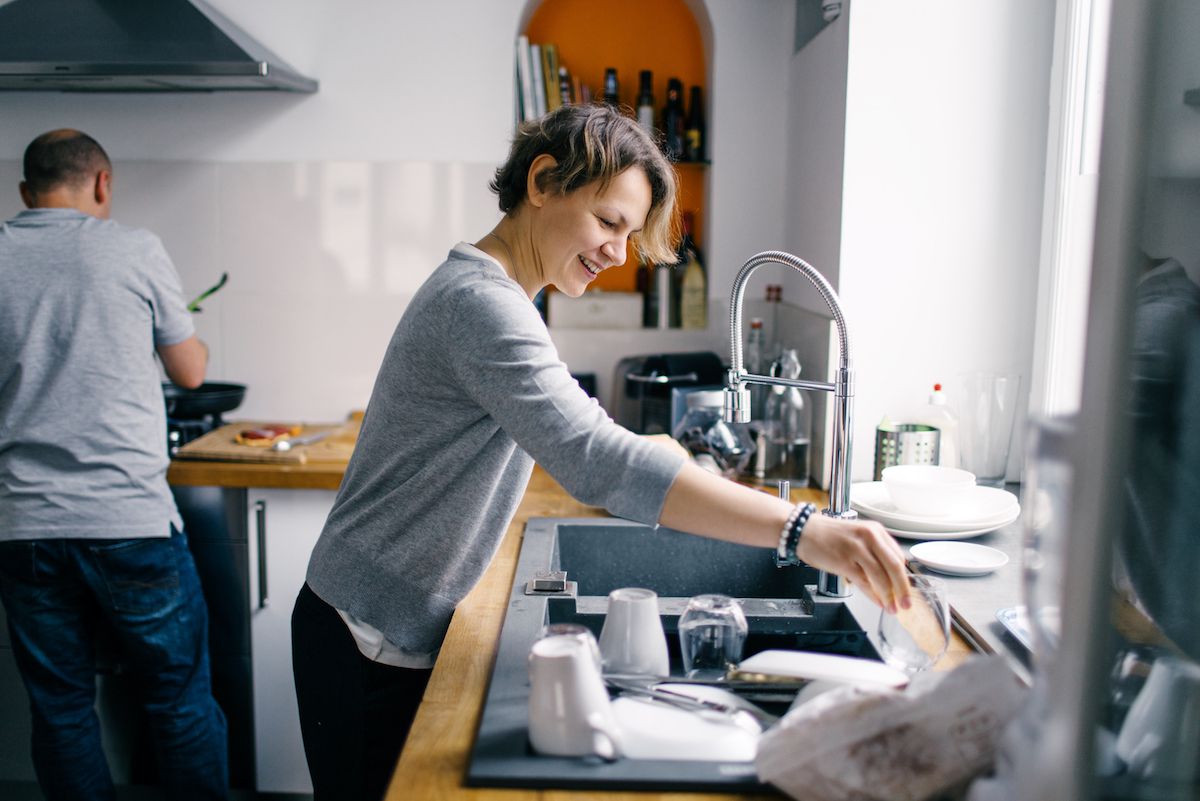
TASK 2 (AGREE OR DISAGREE): HOUSEHOLD TASK DIVISION

Nowadays, women as well as men work full time. Therefore, women and men should share household tasks equally. To what extent do you agree or disagree?
Sample Answer
In this contemporary society, it is evident that full-time employment is no longer solely dominated by men since both genders are professionally engaged on a full-time basis. This has prompted the question of whether household responsibilities, such as housekeeping and childrearing, should be divided down the middle. I also share the perspective of equitable domestic task division, yet the application of this concept should be nuanced rather than rigid.
Proponents of an equal split of domestic responsibilities ground their arguments in the principle of fairness and equality. Household chores, they say, are often varied and physically demanding in nature, which can trigger fatigue and frustration, especially at the end of the day when both parties tend to be exhausted. To wholly relegate these responsibilities to females and treat them solely as housewives, according to this assumption, is decidedly wrong. Sharing tasks, therefore, can reduce unwanted pressure and promote mutual sympathy, contributing to enduring partnerships.
However, to split tasks blatantly down the middle without regarding circumstantial factors is to overlook the intricate tapestry of professional responsibilities. Regarding work duration, a partner working a normal 9-to-5 job may not feel the same sense of burnout as a CEO who devotes 100 hours per week. By the same token, a partner whose strength does not lie within the realm of household management may take longer periods to complete simple tasks, such as dishwashing and trash disposal, compared to someone with a superior housekeeping acumen. Last but not least, household chores should also be divided according to individual strengths and preferences. For example, while a male partner can take care of more labour-intensive responsibilities, such as gardening and general fixing, his female counterpart may be in charge of lighter tasks including child-minding and animal feeding.
In conclusion, while there are legitimate reasons underpinning the equal division of domestic tasks, this should be executed judiciously, taking into consideration unique personal and professional circumstances. In my view, the adoption and division of household chores is a highly personal matter that should be decided upon by those in partnership to ensure fairness, contentment, and comfort.
Vocabulary
| divided down the middle | chia đôi hoàn toàn |
| equitable domestic task division | sự phân chia việc nhà công bằng |
| nuanced rather than rigid | linh hoạt thay vì cứng nhắc |
| principle of fairness and equality | nguyên tắc công bằng và bình đẳng |
| contributing to enduring partnerships | góp phần tạo nên mối quan hệ bền vững |
| intricate tapestry of professional responsibilities | mạng lưới trách nhiệm nghề nghiệp phức tạp |
| realm of household management | lĩnh vực quản lý việc nhà |
| dishwashing and trash disposal | rửa bát và đổ rác |
| individual strengths and preferences | thế mạnh và sở thích cá nhân |
| highly personal matter | vấn đề mang tính cá nhân cao |