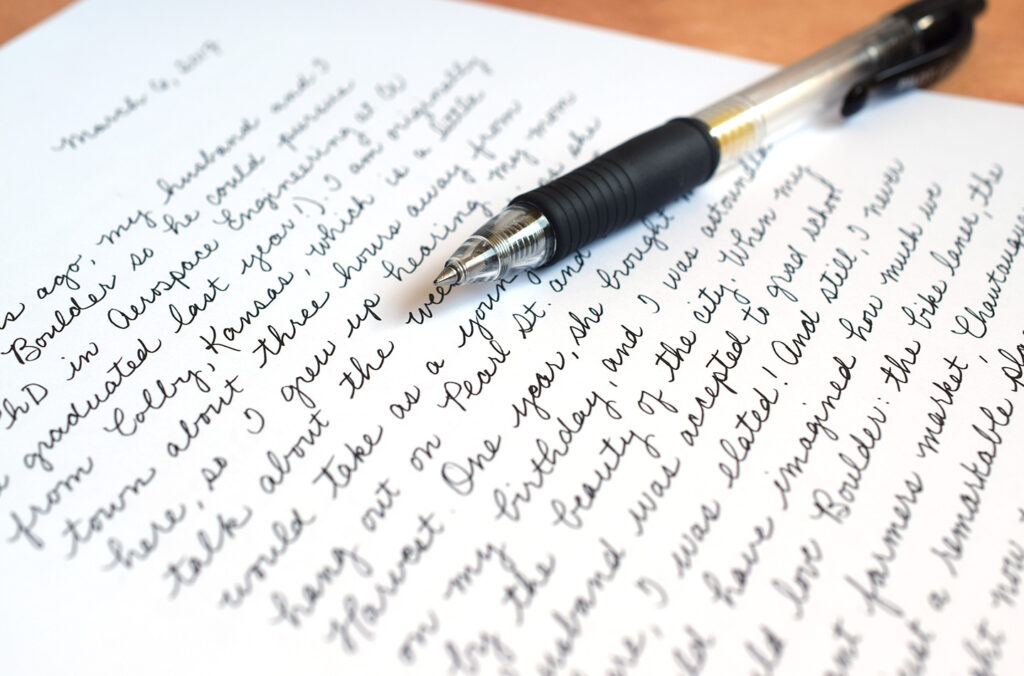
Fewer and fewer people today write by hand using a pen, a pencil, or a brush. What are the reasons for this? Is the decline in writing by hand a positive or negative development?
Sample Answer
Evidently, the 21st century has seen a dwindling proportion of individuals who continue to engage in the act of handwriting by means of pen, pencil, or brush. This declining trend is chiefly attributable to technological developments, and is, in my opinion, an overwhelming negative development despite limited benefits.
The dwindling popularity of handwritten documents in today’s world can be predominantly ascribed to the widespread ubiquity of digital penmanship. In bygone eras, physical writing such as hieroglyphics, calligraphics, and inscriptions were undeniably the only methods of recording human stories, historical events, and bureaucratic statistics. These recording techniques have been, nonetheless, largely marginalised and even pushed to the periphery by the invention of modern computers, alongside their derivatives including keyboards, touchscreens, voice-to-text algorithms, and even spelling correction. These digital breakthroughs in the language recording front have not just democratised literacy, allowing the general public to write with increased comfort, but also enhanced clarity and word-processing—characteristics that fiercely rival those of conventional handwriting. Such conveniences and productivity therefore elevate digital word-processing to the exclusion of traditional physical writing.
The falling out of favour of handwriting is on the whole disadvantageous. Granted, as this gradual obsolescence stems from the rise of online typing and other forms of language spelling, the latter can usher in a digitalised era of unprecedented efficiency, meaning that digital writers can produce far more prolifically than their conventional counterparts. However, this may come at the expense of mental development and cultural erosion. As for the former, writing is closely tied to muscle memory and human motor units, both of which are of paramount importance to children’s cognitive growth. Divorcing handwriting and spelling from conventional language learning can, to some degree, hinder literacy attainment and linguistic development, as can be evidenced across numerous research studies in the field of neuroscience. Culturally, there is an intricate connection between handwriting and arts. Such a link can be seen in writing-based art forms such as calligraphy, cursive writing, and hieroglyphics. By this logic, the gradual obliteration of handwritten pieces may engender the loss of artworks, which can in turn dilute cultural richness and undermine heritage preservation.
In conclusion, the underlying causes for the dwindling trend in handwriting are primarily digital breakthroughs that give rise to online writing with greater convenience and productivity. Despite limited benefits of digital writing, the loss of traditional forms of writing can be detrimental both psychologically and culturally, making it a decidedly negative development..
Vocabulary
| dwindling proportion | tỷ lệ suy giảm |
| technological developments | sự phát triển công nghệ |
| overwhelming negative development | sự phát triển tiêu cực áp đảo |
| dwindling popularity | sự phổ biến suy giảm |
| widespread ubiquity | sự phổ biến rộng khắp |
| digital penmanship | chữ viết kỹ thuật số |
| calligraphics | thư pháp |
| marginalised | bị gạt ra ngoài |
| pushed to the periphery | bị đẩy ra rìa |
| voice-to-text algorithms | thuật toán chuyển giọng nói thành văn bản |
| spelling correction | sửa lỗi chính tả |
| digital breakthroughs | đột phá kỹ thuật số |
| democratised literacy | dân chủ hóa khả năng biết chữ |
| enhanced clarity | sự rõ ràng được cải thiện |
| word-processing | xử lý văn bản |
| conveniences and productivity | sự tiện lợi và năng suất |
| falling out of favour | mất đi sự ưa chuộng |
| gradual obsolescence | sự lỗi thời dần dần |
| digitalised era | kỷ nguyên số hóa |
| unprecedented efficiency | hiệu quả chưa từng có |
| prolifically | một cách phong phú |
| mental development | sự phát triển tinh thần |
| cultural erosion | sự xói mòn văn hóa |
| paramount importance | tầm quan trọng tối thượng |
| cognitive growth | sự phát triển nhận thức |
| literacy attainment | đạt được khả năng biết chữ |
| linguistic development | sự phát triển ngôn ngữ |
| intricate connection | mối liên hệ phức tạp |
| cursive writing | chữ viết tay nét liền |
| gradual obliteration | sự xóa bỏ dần dần |
| engender the loss | gây ra sự mất mát |
| dilute cultural richness | làm loãng sự phong phú văn hóa |
| undermine heritage preservation | làm suy yếu việc bảo tồn di sản |