
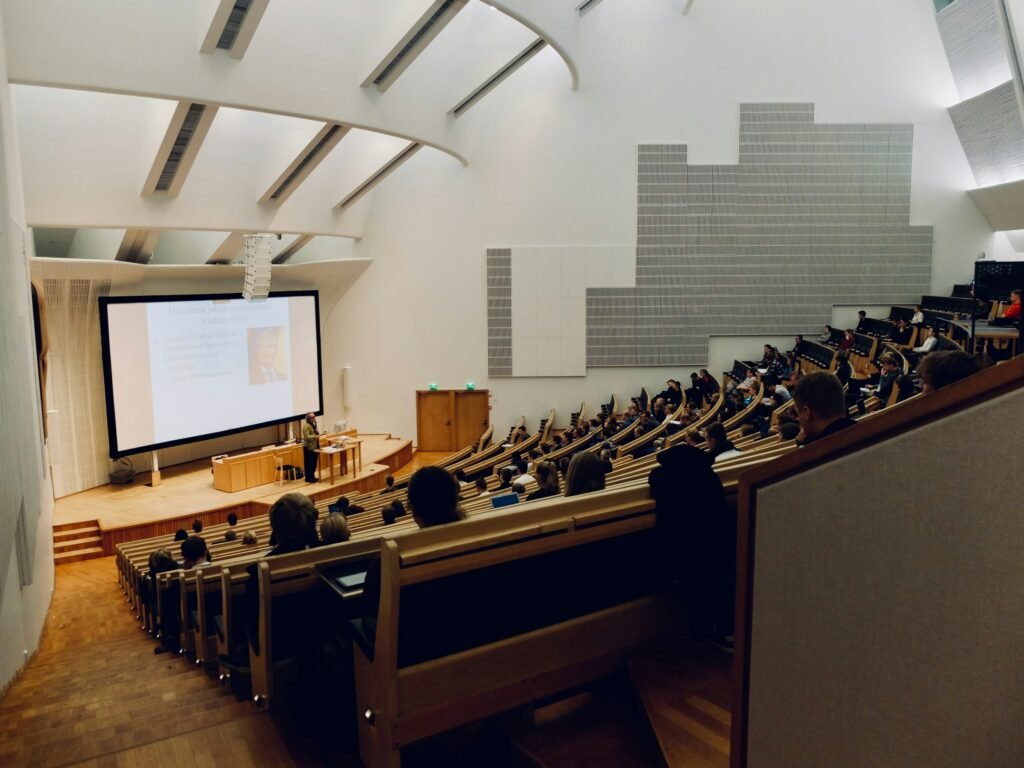
Rising university fees and scarce employment prospects for graduates have led some people to say that universities should not teach arts subjects, such as philosophy and history, and should only offer practical degree courses that maximise graduates’ chances of employment. To what extent do you agree or disagree?
Sample Answer
Mounting higher education tuition fees and dwindling employment opportunities have garnered widespread public attention in recent years, leading some people to argue that tertiary institutions should refrain from offering courses in the social sciences, the arts, and the humanities in favour of more practical degree programmes. This proposed shift in higher education from an arts-related focus to a more pragmatic one is believed to maximise graduates’ chances of securing employment. I do not hold this view, albeit with some reservations.
Proponents of giving precedence to academic disciplines with comparatively greater practical utility point to the pressing demands of the contemporary world. These supporters may cite, for example, the rapid rate of urbanisation across numerous metropolitan areas around the globe, which necessitates a steady and sustained supply of engineers, architects, construction workers, and urban planners, among other professionals. In order to secure employment in these fields, it is undeniable that possessing qualifications in the natural sciences can stand students in good stead when entering the workforce. By the same token, as urban centres expand and the global population grows, such development may bring with it healthcare concerns, including preventable diseases, outbreaks, and terminal illnesses. To address these issues, competent medical practitioners with accredited healthcare qualifications are required, making them an indispensable part of the economy. Similarly, the same can be said of global challenges such as climate change and global warming, for which specialists with degrees in bioengineering or environmental science are in high demand. As a result, these qualifications may appear more critical than those in the social sciences.
However, suggesting that practical degrees should dominate the entire curriculum severely undermines the fundamental role that the arts and social sciences play in modern decision-making and the preservation of moral principles. Take philosophy as an example. If the teaching of ethical values, moral imperatives, and accountability were to be completely omitted from higher education curricula, the repercussions could be far-reaching and irreversible. This could result in an abundance of highly competent engineers across various fields who lack fundamental environmental awareness and ethical reasoning, thereby prioritising short-term economic gains at the expense of long-term ecological sustainability and biodiversity. Likewise, if the study of history were removed altogether in favour of natural sciences such as mathematics, physics, and chemistry, the mistakes of past eras and civilisations could no longer be properly documented, analysed, and evaluated. Unfortunately, these very mistakes often serve as valuable lessons that help humanity navigate the complexities of contemporary society. Without an understanding of historical taboos, past shortcomings, and intercultural conflicts, individuals, businesses, and governments may find it difficult to navigate the complex landscape of an increasingly globalised world.
In conclusion, while there are legitimate arguments supporting the prioritisation of practical degree programmes to address current global challenges and adapt to the modern world, this should not come at the expense of the social sciences, the arts, and the humanities. Instead, universities should strive to maintain a balanced curriculum in which the social sciences provide the ethical foundations and moral guidance that complement the natural sciences, enabling graduates to make informed and responsible decisions in an increasingly globalised, digitalised, and complex world.
Vocabulary
| Mounting higher education tuition fees | Học phí ĐH tăng cao |
| Dwindling employment opportunities | Cơ hội việc làm suy giảm |
| Garner widespread public attention | Thu hút sự chú ý rộng rãi |
| In favour of | Ủng hộ, thiên về |
| Proposed shift | Sự chuyển đổi được đề xuất |
| Maximise graduates’ chances of securing employment | Tối đa hóa cơ hội có việc làm |
| Giving precedence to | Ưu tiên |
| The pressing demands of the contemporary world | Nhu cầu cấp thiết của thế giới hiện đại |
| Urbanisation across numerous metropolitan areas | Đô thị hóa tại nhiều đô thị lớn |
| A steady and sustained supply of | Nguồn cung ổn định và liên tục |
| Stand students in good stead | Mang lại lợi thế cho sinh viên |
| By the same token | Tương tự như vậy |
| Competent medical practitioners | Chuyên gia y tế có năng lực |
| An indispensable part of the economy | Thành phần không thể thiếu của nền kinh tế |
| Global challenges such as climate change and global warming | Các thách thức toàn cầu như biến đổi khí hậu |
| In high demand | Có nhu cầu cao |
| Severely undermines the fundamental role | Làm suy giảm nghiêm trọng vai trò cốt lõi |
| Modern decision-making | Quá trình ra quyết định hiện đại |
| The preservation of moral principles | Việc duy trì các nguyên tắc đạo đức |
| Ethical values, moral imperatives, and accountability | Giá trị đạo đức, chuẩn mực đạo lý và trách nhiệm |
| The repercussions could be far-reaching and irreversible | Hậu quả sâu rộng và khó đảo ngược |
| Fundamental environmental awareness and ethical reasoning | Nhận thức môi trường và tư duy đạo đức nền tảng |
| Long-term ecological sustainability and biodiversity | Tính bền vững sinh thái và đa dạng sinh học dài hạn |
| An increasingly globalised world | Thế giới ngày càng toàn cầu hóa |
| A balanced curriculum | Chương trình học cân bằng |